




Vermiculit / Vermiculite
Mineralogical
Vermiculite is one of the clay minerals. Vermiculite is an aluminium-iron-magnesium-silicate, which belongs to the mica group because it is has a similar structure and appearance and forms flaky crystals in the same way. The name of the vermiculite mineral comes from the Latin word vermiculus: "little worm".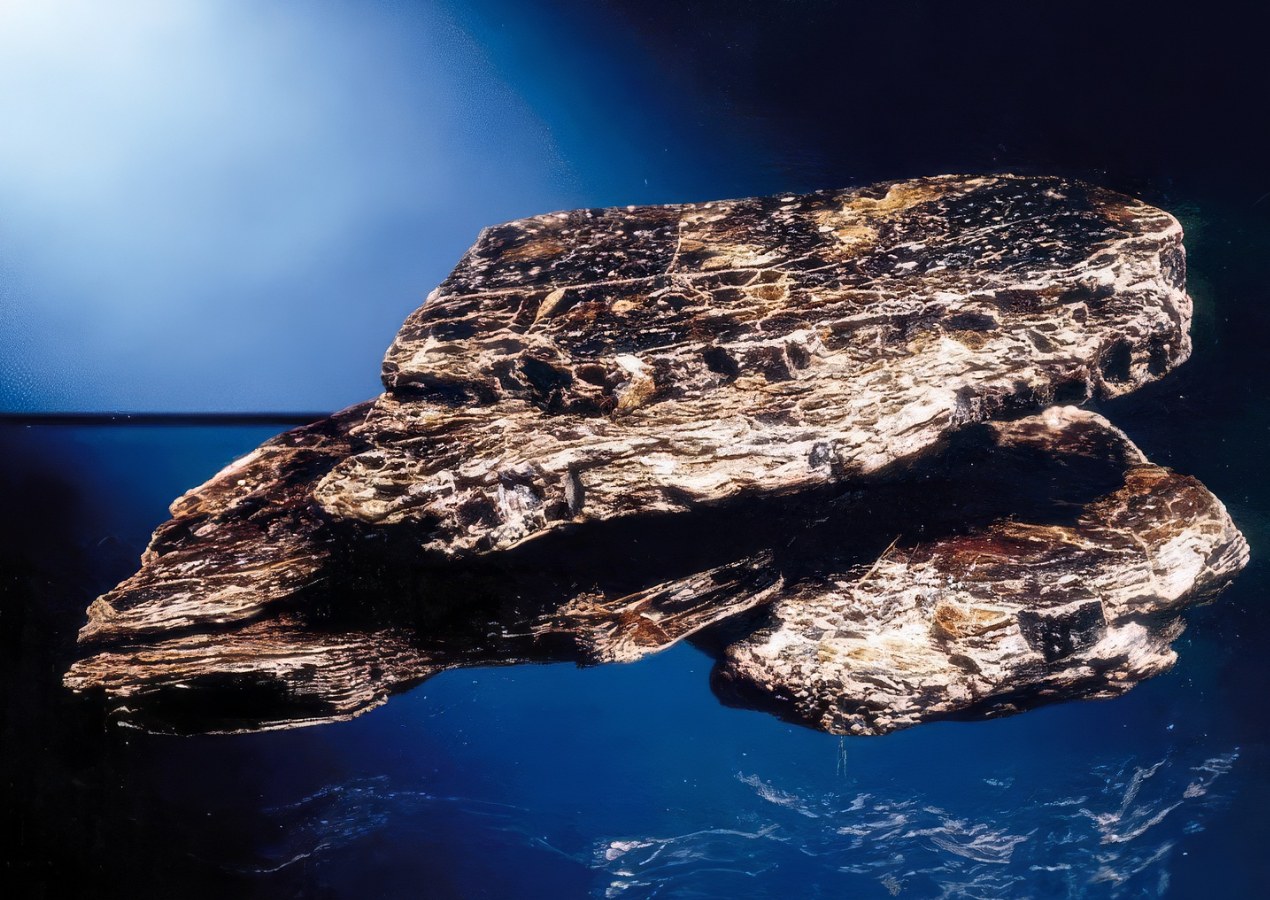
Structure and manufacturing process
Raw vermiculite consists of thin, flat little plates. The exfoliation (expansion) takes place at a high temperature (800 - 1000 °C) without adding other substances. With the produced water vapour (reduction of the crystal water), the individual layers of the structure are forced apart. The volume of the vermiculite particles hereby enlarge by around 20 times. Expanded vermiculite is produced in various grain sizes.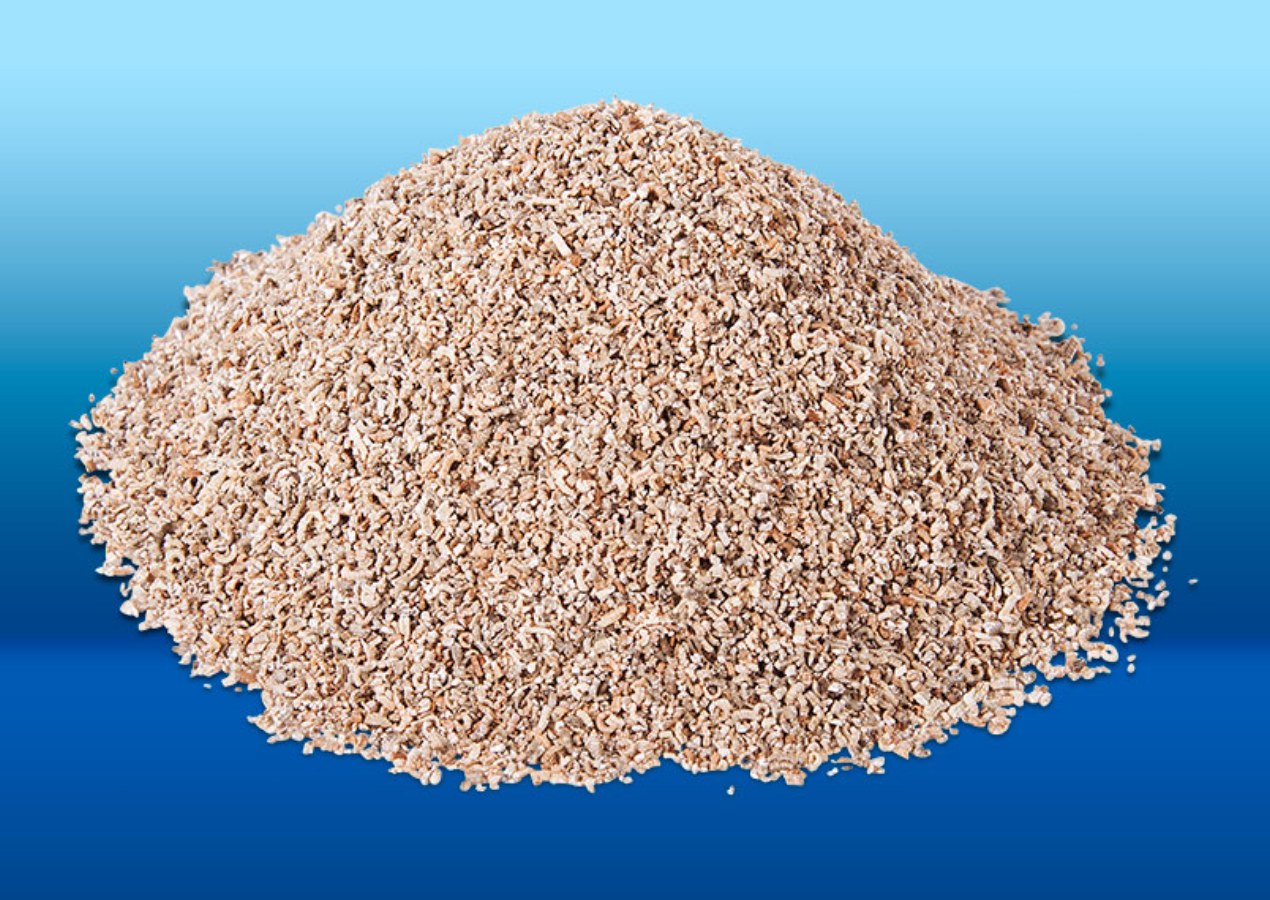
Properties
| pH-Wert | approx. 7,5 |
|---|---|
| Sintering temperature | approx. 1.260° C |
| Melting point | approx. 1.315° C |
| Humidity | 1 - 1,5% after expansion |
| Trade hygiene | no silicosis danger |
| Non-flammable | Klasse A1 according to DIN 4102 |
| Thermal conductivity | 0,07 W/mK according to DIN 4108 |
Thermal conductivity figures
The following diagram shows the thermal conductivity figures of vermiculite granulations at -100°C to +500°C average temperature. At higher temperatures, due to the stronger temperature flow (convection), a smaller granulation is recommended. However, you can reduce the thermal flow when using coarser granulation if the material is carefully pressed by around 10% upon installation.Vermiculite is an environmentally-friendly product which can be returned to nature as a recyclable material.
Vermiculite is an important basic module in the Building industry , in Industry , in Fire protection , in Gardening and in Animal care.

Areas of application
Typical Applications for Loose Vermiculite- as insulation in building construction
- as back‑up insulation in industrial furnace construction
- as a covering material in the iron and steel industry
- the use of vermiculite in mold casting for the slow, controlled cooling of large cast parts
- as a lightweight, compressible bulk material functioning as a shock absorber with high absorption capacity
Chemical average analysis
| SiO2 | 35-41% |
|---|---|
| P2O5 | 0,2-2% |
| Al2O3 | 6-9,5% |
| Li2O | 0,03% |
| TiO2 | 0,6-1,4% |
| ZrO2 | Spuren |
| Fe2O3 | 6-9,5% |
| Cr2O3 | 0,01-0,15 |
| Na2O | 0,80% |
| F | 0,2-0,8% |
| K2O | 3-6% |
| SO3 | 0,02% |
| S | 0,18% |
| H2O + 105 C | 5,18% |
| Cl | 0-0,5% |
| H2O | 105 C 6,02% |
| FeO | 1,17% |
| NiO | Spuren |
| V2O3 | Spuren |
| MuO | 0,30% |
| MgO | 21,5-25,5% |
| CoO | Spuren |
| CaO | 2-6% |
| BaO | Spuren |